Historic Homes in Princeton NJ: Style and Buyer Tips
April 16, 2026
April 16, 2026
If you are drawn to Princeton’s historic homes, you are not alone. These properties offer architectural character, layered local history, and details that are hard to replicate in newer construction. If you are thinking about buying one, it helps to know what you are looking at, what questions to ask, and what ownership may involve. Let’s dive in.
Princeton has a notably broad range of historic housing, from 18th-century brick dwellings and Federal-era homes to 19th-century vernacular houses and early-20th-century revival estates. The town’s preservation framework includes 21 historic preservation overlay zoning districts, covering both estate-style settings and more compact residential streetscapes. According to Princeton’s historic preservation regulations, these districts include Type 1 areas such as Maybury Hill and Drumthwacket, and Type 2 areas such as Jugtown, Mercer Hill, Witherspoon-Jackson, and the Central Historic district.
What makes these homes especially appealing is that their value is not just about the building itself. As outlined in Princeton’s Historic Preservation Master Plan, the town’s historic resources also include streetscapes, viewsheds, and cultural landscapes. For you as a buyer, that means the setting often matters just as much as the house.
Before you fall in love with a façade or start planning renovations, it is important to understand how Princeton’s preservation system works. The Office of Historic Preservation manages day-to-day review, while the Historic Preservation Commission handles broader preservation decisions and reviews certain applications.
That matters because exterior changes in locally designated historic districts may require review. The rules can differ depending on whether a property sits in a Type 1 or Type 2 district, and whether the work is visible from the public right-of-way. In short, buying a historic home in Princeton can mean buying into a set of design and preservation standards as well.
Princeton’s historic core includes a rich mix of architectural styles. Learning the visual clues can help you better understand a home’s character and likely maintenance needs.
Federal-era homes in Princeton often include modest brick dwellings or wood-framed houses with refined details such as fanlights and delicate carved wood trim. In some older sections of town, especially areas discussed in the master plan, these homes reflect Princeton’s earliest residential growth.
Greek Revival homes often show stronger geometry. You may notice pediments, recessed porches, corner pilasters, and large rectangular windows. These details can give the home a formal, balanced appearance that still feels approachable.
Italianate homes in Princeton are often 2 to 2½ stories and tend to stand out through decorative rooflines and porch details. Official local examples note bracketed cornices, molded consoles, and ornamental surrounds.
If you are touring an older home and notice jigsaw-cut brackets or a prominent porch under a hipped roof, you may be looking at an Italianate design. These decorative exterior features can be beautiful, but they also deserve careful inspection because trim and woodwork are exposed to weather over time.
Queen Anne and related late-Victorian homes appear in areas such as Jugtown, Mercer Hill, Bank Street, and parts of Witherspoon-Jackson. Princeton’s master plan describes Bank Street as a cohesive district of vernacular Queen Anne-style houses with Victorian decoration.
For you as a buyer, these homes may offer varied rooflines, decorative trim, and a more expressive streetscape presence. They can also include more exterior elements that need regular care, especially around porches, windows, and trim.
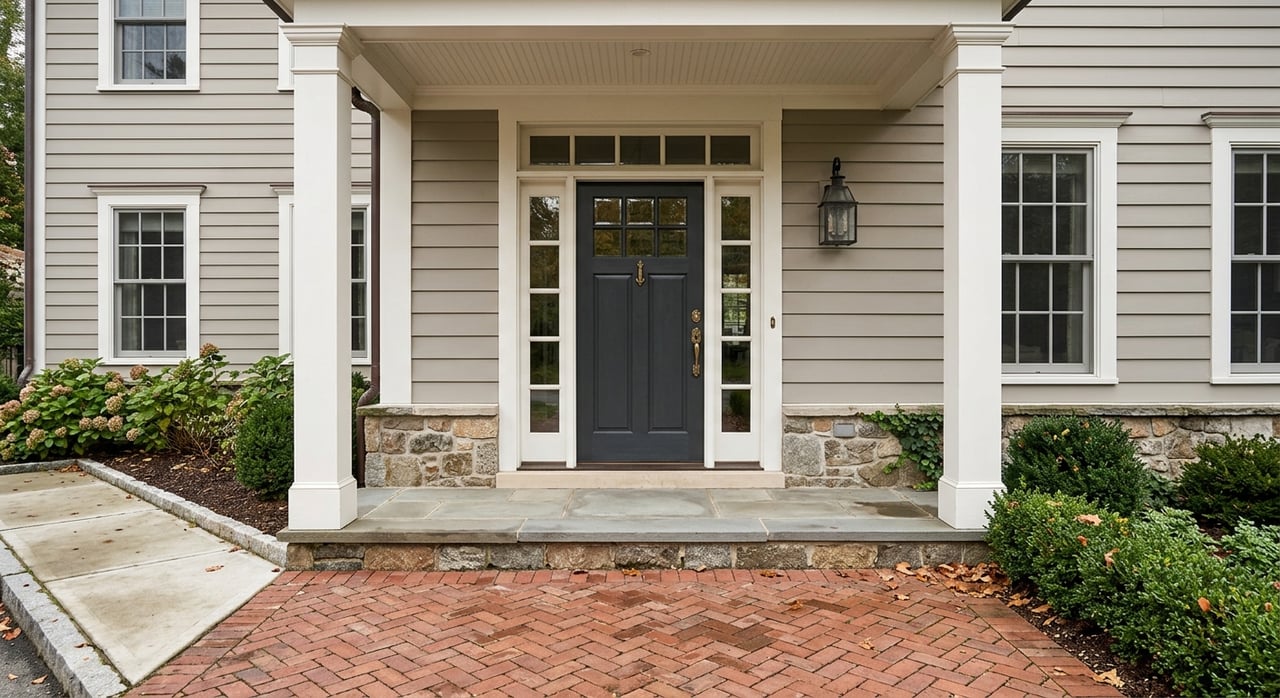
Colonial Revival homes became prominent in early-20th-century Princeton. These homes often feature symmetrical fronts, porticos, pilasters, and traditional sash windows such as 6-over-6 configurations.
Many buyers are drawn to Colonial Revival architecture because it feels classic and familiar. In Princeton, these homes often sit comfortably within historic settings while offering a slightly later architectural chapter than the town’s earliest housing stock.
If you are looking at Princeton’s larger historic properties, Tudor Revival may come into view. Princeton’s master plan identifies Constitution Hill and Edgerstoune as examples connected to Tudor-inspired and English Tudor Revival architecture.
These homes often have a distinct visual presence and may sit within larger landscape settings. Because Princeton’s historic planning also values landscape character, the grounds can be an important part of the ownership picture.
Some of Princeton’s streets show the town’s historic variety especially well. John Street, for example, includes many homes dating from the mid- to late 19th century and presents a mix of styles on smaller lots.
Green Street has a high concentration of pre-1880 buildings, including vernacular Greek Revival examples and other 19th-century dwellings. These kinds of blocks help illustrate an important point for buyers: Princeton’s historic homes are not all grand estates. Many are modest, practical homes with significant architectural and cultural value.
Character is exciting, but condition matters just as much. In older and historic buildings, the National Park Service notes that uncontrolled moisture is the most common cause of deterioration.
That means your inspection mindset should start with water. Look closely at the roofline, gutters, downspouts, flashing, grading, and any signs that water is not moving away from the home as it should. Small drainage issues can turn into larger repairs if they are ignored.
As you evaluate a property, consider asking:
The National Park Service exterior guidance highlights these issues because they often point to preventable problems rather than one-time cosmetic concerns.
In Princeton’s older homes, windows and porches are often both character-defining and maintenance-intensive. Princeton’s guidelines for sustainable historic structures note that a well-maintained historic window with a storm window can be as energy efficient as a new window.
That is a useful reminder if you are worried that original windows automatically mean poor performance. In many cases, repair and preservation may be preferable to full replacement, especially when original sash and frame details remain intact.
Porches deserve the same careful attention. The same guidance recommends regular checks for rot, insect damage, structural connections, drainage, and floor slope. If a porch looks charming but neglected, it is wise to understand whether the issue is routine upkeep or something more substantial.
If you already have renovation ideas, pause before assuming you can make visible exterior changes freely. Princeton’s preservation rules generally favor repair over replacement, minimum intervention, and reversible changes when possible. According to Princeton’s preservation standards, original materials should be maintained or repaired when feasible, and replacement materials should match the original in material and size.
That can affect decisions about siding, roofing, storm windows, doors, porches, and trim. It can also affect landscaping, drainage work, and visible additions.
One important distinction for buyers is whether the home is in a Type 1 or Type 2 district. Under Princeton’s historic district regulations, painting previously unpainted surfaces in a Type 1 district requires review, while in Type 2 districts a paint color change alone does not require review. In both cases, visible exterior work from the public right-of-way can trigger review.
This is one reason due diligence matters so much. Two attractive historic homes in Princeton may come with very different review requirements depending on their district and the scope of your plans.
Before you buy, consider asking local officials, your attorney, and your inspector:
Princeton allows concept plans for informal, nonbinding feedback through the Office of Historic Preservation, which can be a smart step if you are considering future exterior work.
If the home was built before 1978, lead-based paint is another important consideration. The EPA explains that older homes are more likely to contain lead paint, and deteriorating lead paint can be hazardous.
If renovation, repair, or painting work will disturb painted surfaces, lead-safe certified contractors may be required under the Renovation, Repair and Painting Rule. Buyers of most pre-1978 housing also have the right to receive lead-hazard information before closing, so this should be part of your due diligence checklist.
Not every older home presents the same level of risk or complexity. In practical terms, the most buyer-friendly historic homes are often the ones with intact original features, manageable moisture issues, and a renovation history that respected the home’s existing character.
That does not mean a home has to be perfect. It means you want a clear picture of what has been preserved, what has been altered, and what maintenance rhythm the property may need going forward.
Buying a historic home in Princeton can be incredibly rewarding when you go in with the right expectations. The architecture is varied, the setting is meaningful, and the ownership experience can feel deeply connected to the town’s character.
The key is to balance charm with practical due diligence. If you want help evaluating Princeton homes, understanding district considerations, or comparing options that fit your goals, Janet Stefandl offers calm, informed guidance rooted in long experience with the local market.
Stay up to date on the latest real estate trends.
Janet Stefandl's professionalism, calm demeanor, and unwavering support have earned her glowing testimonials and repeat business. With Janet, you’re choosing a dedicated advocate who is committed to making your real estate vision a reality.

100 OVERLOOK CTR FL 2 PRINCETON NJ 08540