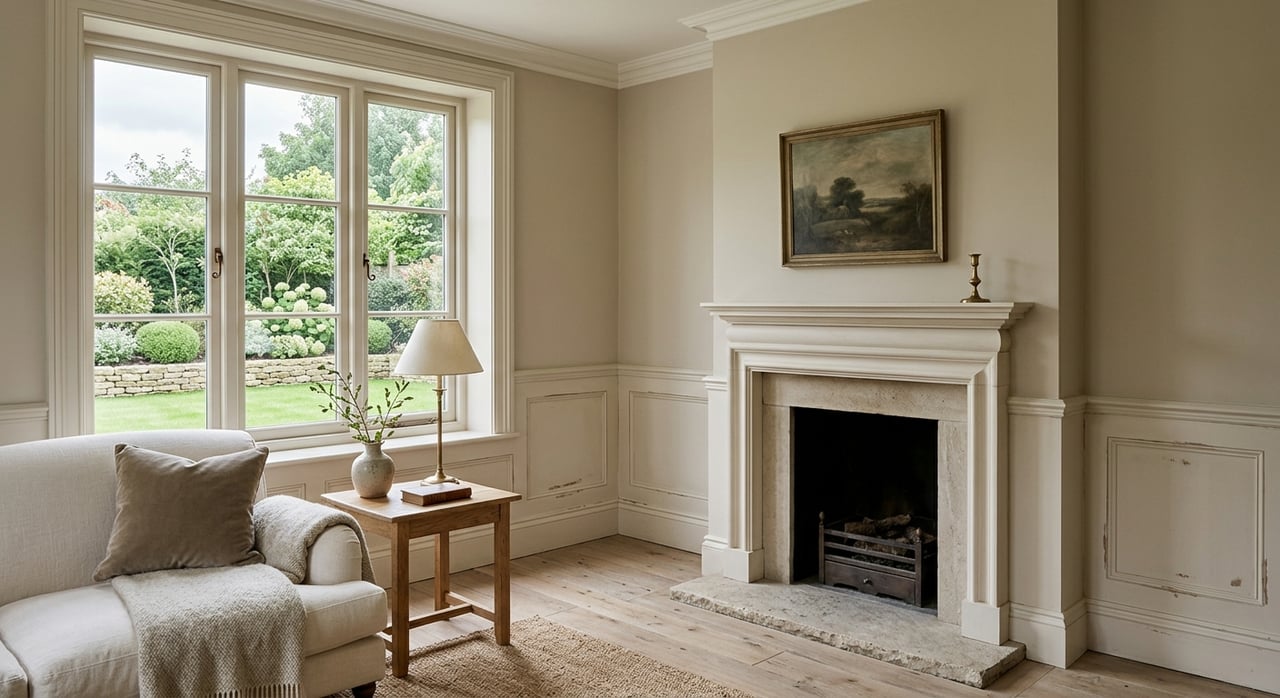
Your Guide to Relocating to Princeton, NJ
June 25, 2026
June 25, 2026
Thinking about relocating to Princeton, NJ? It is the kind of place that can feel easy to picture from a distance, but much more layered once you start planning your day-to-day life. If you want to understand how Princeton works before you move, this guide will help you get oriented around landmarks, commuting, housing, and your first few practical steps. Let’s dive in.
Princeton is a compact municipality in Mercer County with an estimated 31,469 residents as of July 1, 2025. The municipality spans 18.4 square miles, and more than one-quarter of its land is preserved as open space. That mix helps Princeton feel both connected and spacious.
One of the first things many newcomers notice is that Princeton is shaped by both residential areas and major institutions. Princeton University, the Institute for Advanced Study, the Hun School, Princeton Day School, and Stuart Country Day School of the Sacred Heart are all within town boundaries. As a result, the town often feels lively, established, and highly walkable in some sections, while more residential in others.
If you are trying to get your bearings quickly, a few landmarks will help you understand how Princeton fits together.
Downtown Princeton centers on Nassau Street and Palmer Square. Palmer Square serves as the mixed-use downtown core, with retail, dining, office space, the Nassau Inn, and residential units. If you picture the heart of town, this is usually where that picture starts.
For many buyers and renters, this area also sets the tone for what “in-town Princeton” means. You are close to shops, restaurants, and daily conveniences, and the setting feels distinctly urban-village rather than suburban.
Princeton University sits directly next to downtown, so it is part of everyday orientation. Nassau Hall is the centerpiece of campus, and FitzRandolph Gate is the official entrance. Even if you are not affiliated with the University, these landmarks help you understand how closely town and campus connect.
Witherspoon Street is another important anchor. The Municipality describes it as the heart and historical center of Princeton’s Black community, and the Arts Council of Princeton operates from 102 Witherspoon Street in the Witherspoon-Jackson Historic District. This corridor is both practical and culturally significant.
Princeton Public Library at 65 Witherspoon is one of the most useful first stops for newcomers. It offers research tools, classes, and events, and Princeton Public Schools notes that families without computer access can use the library to complete online registration. If you are new in town, the library can be a real starting point for getting connected.
Princeton Station at 152 Alexander Street helps you understand the town’s rail geography right away. It is the downtown end of the Dinky, which connects Princeton with Princeton Junction. If commuting matters to you, this station is one of the most important reference points in town.
Princeton’s transportation network combines rail, buses, and access to major roads. US Route 206 runs through town, and Route 1, the New Jersey Turnpike, and the Garden State Parkway are all relatively quick connections. That gives you a mix of local mobility and regional reach.
The Princeton Dinky is a short rail shuttle that runs seven days a week. The trip takes about five minutes, with no intermediate stops, between downtown Princeton and Princeton Junction. From Princeton Junction, NJ Transit’s Northeast Corridor service provides direct access toward New York City and Newark Liberty, and southbound riders can transfer at Trenton for SEPTA service to Philadelphia.
For many relocating buyers, this is one of the biggest practical advantages of Princeton. You can live in a town with a strong local identity while still keeping a workable connection to larger job centers.
Princeton Station also connects to other transit options. NJ Transit Route 605 serves downtown, north and east neighborhoods, and the Princeton Shopping Center. Princeton University’s TigerTransit and Princeton’s freeB bus also connect riders to the station.
At Princeton Junction, NJ Transit Routes 600 and 612 extend access to the US 1 corridor, Trenton, Plainsboro, Lawrence, and West Windsor. If you are comparing homes partly based on commute logistics, these connections can make a meaningful difference.
If you plan to drive regularly, it helps to learn Princeton’s parking system early. Downtown uses metered spaces, pay stations, garages, and app-based payment. Some former Borough streets also prohibit overnight parking from 2 to 6 a.m., so it is worth understanding the rules before your first week in town.
Princeton is not a one-style housing market. The local housing mix includes detached homes, attached homes, condominiums, and rentals, but the supply is weighted toward detached single-family housing and higher price points. That matters if you are relocating with a specific lifestyle or budget in mind.
According to local planning data, 53.1% of occupied housing units are single-family detached homes, and 37.3% of units have two bedrooms or fewer. Census data shows an owner-occupied housing rate of 55.4%, a median owner-occupied value of $1,050,600, and a median gross rent of $2,636. The Municipality also reports high housing costs, limited smaller units, and demand that outpaces supply.
Princeton’s development pattern helps explain why your options can feel so different from one part of town to another. Older in-town streets and neighborhoods cluster around Nassau Street, University Place, and Witherspoon. Later growth, especially in the former Township, created more subdivision-style residential areas.
In practical terms, you may be comparing walkable downtown condos and townhomes, historic in-town houses, and more suburban detached homes. None of those options is automatically better than another. The best fit depends on how you want to live each day.
If low-maintenance living and walkability are high on your list, downtown gives you some clear reference points. Palmer Square includes 224 residential condominium units alongside retail, office, and hotel uses. That makes it a useful example of what a central, walkable lifestyle can look like in Princeton.
If you want more separation, larger lots, or a more traditional residential setting, you may find that your search naturally expands beyond the downtown core. Because detached single-family homes make up a large share of the local housing stock, many buyers relocating to Princeton focus on tradeoffs like commute convenience, home size, and proximity to daily destinations.
Once you have a move date, the next step is making Princeton feel functional. A little setup work early on can make the transition much smoother.
For many homeowners in Princeton, utility service typically includes PSE&G for electric and gas, New Jersey American Water for water, and the municipal Sewer Department for sewer service. Wired phone and internet are generally provided by Comcast or Verizon, depending on location. Many of these utilities are regulated by the New Jersey Board of Public Utilities.
This is one of the easiest details to miss and one of the fastest ways to feel disoriented. Princeton’s cart program requires municipal carts for trash collection, and loose or bagged trash will not be collected. Bulk waste is collected on Wednesdays by reservation, so this is worth learning in your first week.
If you plan to rent before buying, it helps to know that Princeton requires one- and two-family rental properties to register and undergo a full inspection every two years. Properties built before 1978 also require lead-hazard inspections and a lead-safe certificate. Nonresident owners must designate a local agent.
These rules may not affect every renter directly, but they are useful to understand if you are evaluating temporary housing options during a relocation.
For families moving to Princeton, school logistics are often part of the relocation timeline. Princeton Public Schools includes four elementary schools, one middle school, and one high school. Registration begins with a pre-registration form, followed by proof of residency and other required documents.
The district notes that if you move within Princeton and your school assignment changes, Central Registration must be notified. Families without computer access can use Princeton Public Library to complete registration.
Practical details can also help you plan ahead. Princeton Public Schools offers full-day kindergarten, and Community Park offers dual-language Spanish-English immersion for grades K-5. Since assignment procedures are address-based, your exact location can shape your school-related logistics.
One of the best ways to settle into Princeton is to rely on the places that residents use every day.
The library is more than a place to borrow books. It is a civic and research hub with classes, events, and practical support for new residents. If you want one easy first stop after your move, this is it.
The Princeton Recreation Department offers year-round programs and Community Park Pool. If your goal is to build routine and get connected, recreation programming can be a simple way to start.
The Arts Council operates from the Paul Robeson Center at 102 Witherspoon in the Witherspoon-Jackson Historic District. For newcomers, it adds another layer to understanding Princeton beyond housing and commuting.
Princeton is small enough to learn quickly, but the details of daily life still matter. Transit access, school registration, parking, and housing type can all shape your experience more than you might expect before moving.
That is why a smart relocation plan usually starts with a few practical questions:
When you answer those questions clearly, the town starts to make sense much faster. Princeton offers a lot, but the right fit depends on how your household wants to live day to day.
If you are planning a move to Princeton and want steady, local guidance on neighborhoods, housing options, and the tradeoffs that come with each area, Janet Stefandl can help you relocate with clarity and confidence.
Stay up to date on the latest real estate trends.
Janet Stefandl's professionalism, calm demeanor, and unwavering support have earned her glowing testimonials and repeat business. With Janet, you’re choosing a dedicated advocate who is committed to making your real estate vision a reality.

100 OVERLOOK CTR FL 2 PRINCETON NJ 08540