Buying in One of Princeton's 21 Historic Districts? The Rulebook Is Being Rewritten This Month
August 13, 2026
August 13, 2026
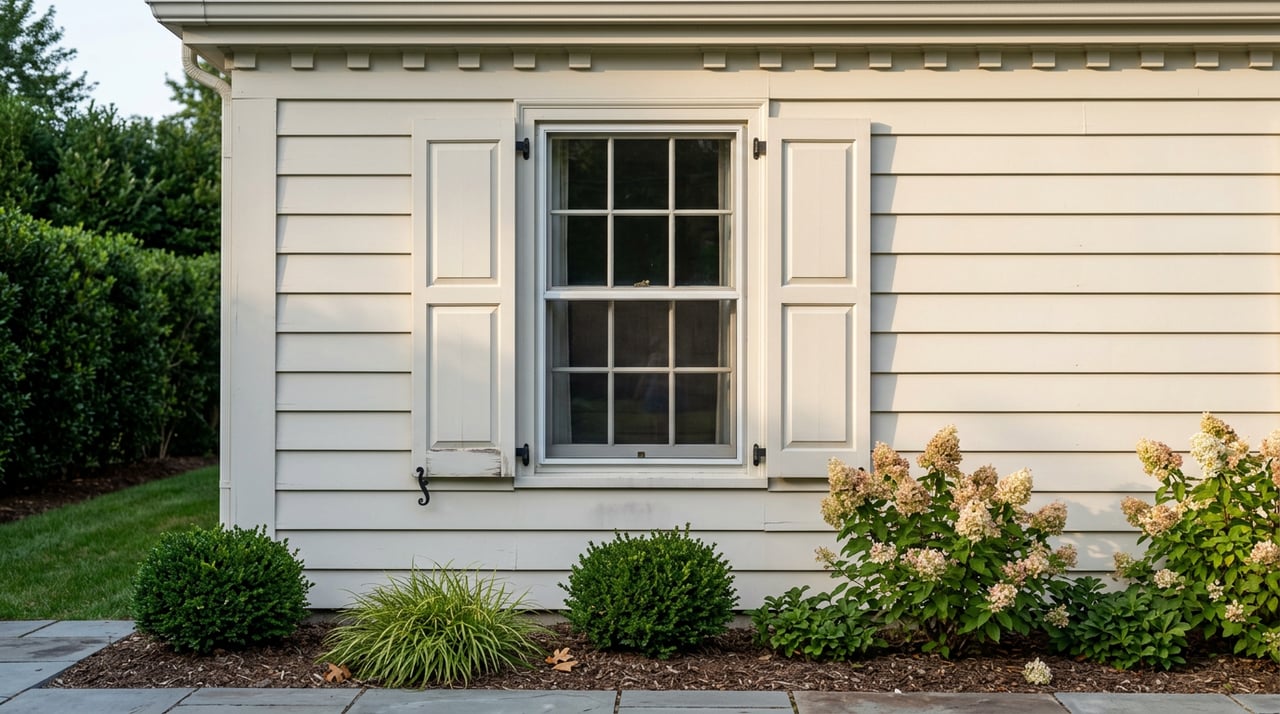
A buyer touring a two-story colonial near the Jugtown crossroads falls for the original six-over-six windows, then mentions, almost in passing, that she'd probably swap them for something more efficient after closing. Her agent pauses. The house sits inside a historic district, which means that swap isn't a weekend project decided at Sunday dinner. It's an application.
That pause is the thing most buyers never budget for. Princeton has 21 designated historic districts, and inside them, exterior changes aren't simply a matter of taste and a contractor's schedule. They go through a review process that can move quickly for routine requests and slowly, sometimes for a year or more, for anything contested. What makes this a strange month to be house hunting in one of these districts is that the rulebook governing that process is itself mid-rewrite. The town's Historic Preservation Commission unveiled its first comprehensive design guidelines on August 5, and public comment on them stays open only through August 24, according to Town Topics. Anyone planning a fall renovation in a historic district is planning against a document that doesn't exist in final form yet.
Princeton's historic districts fall into two tiers, and the tier matters more than most buyers realize. Type 1 districts include estate-scale and institutional properties such as Drumthwacket, Princeton Battlefield-Stony Brook Settlement, and the Delaware & Raritan Canal Historic District. Type 2 districts are the ones most home shoppers actually encounter: Jugtown, Bank Street, Mercer Hill, the Central Historic District, Witherspoon-Jackson, and Prospect Avenue, according to Princeton's own municipal code, available through eCode360.
The distinction isn't just administrative trivia. Under that same code, repainting a house in Type 1 counts as a reviewable alteration if the new color is "substantially out of character" with its surroundings. The identical repaint job on a Type 2 property isn't treated as an alteration at all. So the same can of paint can mean a phone call to a contractor in one district and a filing with the Office of Historic Preservation in the one next door.
More broadly, Town Topics reports that any exterior change in a historic district generally has to be reviewed for compatibility before it happens. That single sentence is the whole reason this post exists.
The clearest evidence of how this process really behaves isn't a pamphlet. It's the fight over the Joseph Hornor House, an 18th-century structure at the Nassau and Harrison Streets crossroads that anchors the Jugtown Historic District.
In May 2024, a developer proposed a four-story, roughly 20,000-square-foot addition with 15 apartments, which required demolishing part of the house's rear wing. The Historic Preservation Commission rejected it outright, as Patch reported at the time. That should have been the end of it, or the start of a lawsuit. Instead, the developer and the neighborhood group that opposed the project, Save Jugtown, spent more than a year negotiating directly.
By December 1, 2025, a new design was on the table: no demolition, three stories instead of four, 10 units instead of 15, and a five-foot setback from Harrison Street. The HPC endorsed it, as Planet Princeton covered in detail. HPC chairperson Julie Capozzoli summed up how far the compromise went, telling the commission on the question of exterior color, "I defer to Save Jugtown on color. They will see it every day." The revised plan cleared the Zoning Board of Adjustment in February 2026, the Daily Princetonian later noted, roughly 21 months after the original filing.
This was a commercial-scale redevelopment, not a homeowner's kitchen addition, and most residential projects never come close to that timeline. But it shows what the system does when it disagrees with you: it doesn't fine you, it makes you start over.
| Scenario | What's actually required | What the record shows |
|---|---|---|
| Repainting a Type 2 district home, same color | Not considered an alteration | No review triggered, per municipal code |
| Repainting a Type 1 district home, new color | Reviewed if "substantially out of character" | Standard preservation plan review |
| Preservation plan bundled with a zoning variance (additions, ADUs) | HPC issues an advisory recommendation to the Zoning Board | A 45-day completeness review period before any hearing, per Princeton's HPC FAQ, plus a 10-day window to appeal an unfavorable HPC recommendation |
| A contested, full-scale redevelopment | HPC hearing, possible rejection, redesign, then Zoning Board and Environmental Commission review | Roughly 21 months from initial filing to final approval, per the Hornor House case |
A homeowner replacing garage doors is not going to spend 21 months in front of a commission. But the completeness review period alone means even a routine variance-plus-preservation-plan filing has a built-in 45-day floor before a hearing date even gets set.
Buyers tend to assume this process only applies to major additions. The Historic Preservation Commission's own February 2026 agenda tells a different story. Among the applications on that single meeting's docket:
Full agenda details are on Princeton's Agenda Center. Princeton University itself has gone through the same review for window, fence, and roof work, plus tree removal, at a Mercer Hill District property on Mercer Street. Garage doors, solar panels, storefront paint. None of that reads like a grand redevelopment. It reads like an ordinary homeowner's punch list, filtered through a formal process anyway.
Here's the part that makes timing matter. The Historic Preservation Commission spent the past year drafting Princeton's first general design guidelines manual, meant to give homeowners and contractors a clearer reference for what will and won't pass review. The commission surveyed the public earlier this summer and got close to 160 responses, preservation officer Sara Quinlan told Town Topics, with concerns clustering around demolition and the preservation of trees and plantings, not just buildings. The draft guidelines were presented publicly on August 5 at Witherspoon Hall, with consultant Dominique Hawkins walking attendees through them, and comment stays open through August 24 at princetonnj.gov/hpcdesign, according to Town Topics.
That timing isn't a coincidence. It follows directly from the Hornor House fight. In March 2026, the Princeton Council passed an ordinance reducing the maximum building height in the relevant affordable housing overlay from 45 feet to 35 feet and barring new construction on top of street-fronting historic buildings, a change the Daily Princetonian tied explicitly to the lessons of that case. The town is actively tightening and clarifying its own rules in real time, which means the guidance a buyer would use to plan a September project isn't finished being written.
If you're weighing a historic-district purchase right now, a few questions are worth asking before you write an offer:
None of this is a reason to avoid these neighborhoods. Some of Princeton's most sought-after streets sit inside them precisely because the review process has kept their character intact for decades. It's a reason to plan with accurate information instead of assumptions borrowed from a non-historic listing across town.
Does historic district review apply to interior renovations? Generally no. The review process is triggered by exterior changes, not what happens inside the walls.
My house is old but I don't think it's in a mapped historic district. Does any of this apply? The Office of Historic Preservation's review authority is tied to Princeton's 21 mapped districts. An old house outside those boundaries isn't subject to this process, though it's worth confirming the exact boundary with your agent or the town's zoning map before assuming either way.
Can I still install solar panels on a historic-district home? Yes. The recent application at 425 Basin Street shows solar installations go through standard preservation plan review. It's a process to plan around, not a prohibition.
If you're weighing a purchase or a listing inside one of Princeton's historic districts this fall, it helps to have someone who reads these agendas before you sign anything contingent on renovation plans. Janet Stefandl has spent two decades working through Princeton's older housing stock and the town processes that come with it. Get Your Instant Home Valuation and start the conversation about what a specific address, and its district, actually means for your plans.
Stay up to date on the latest real estate trends.
Janet Stefandl's professionalism, calm demeanor, and unwavering support have earned her glowing testimonials and repeat business. With Janet, you’re choosing a dedicated advocate who is committed to making your real estate vision a reality.

100 OVERLOOK CTR FL 2 PRINCETON NJ 08540