A Local Princeton NJ Neighborhoods Guide
July 16, 2026
July 16, 2026
If you have started exploring Princeton, you have probably noticed that one address can feel very different from another just a few minutes away. That is because Princeton’s micro-neighborhoods are not just marketing labels. They reflect real differences in housing style, streetscape, open space, and daily routines. This guide will help you understand three well-known pockets, Western Section, Riverside, and Littlebrook, so you can compare them with more confidence. Let’s dive in.
In Princeton, neighborhood names often work as local shorthand rather than strict boundaries. The municipality’s GIS tools let you check details like address location, zoning, historic districts, parks, trails, and infrastructure, which is helpful when you want to look beyond a listing photo.
These smaller pockets also show up in local planning conversations. During Princeton’s 2023 master-plan process, separate listening sessions were held for the Western Side and the Eastern Side, also identified as Riverside/Jugtown. That tells you these areas carry distinct local identity and practical differences.
A quick historical view helps explain why. Princeton’s westerly side became known for large estates and fine architecture by the mid-19th century, the northwestern section saw more suburban growth in the 1920s and 1930s, and post-World-War-II expansion later created newer neighborhoods such as Littlebrook.
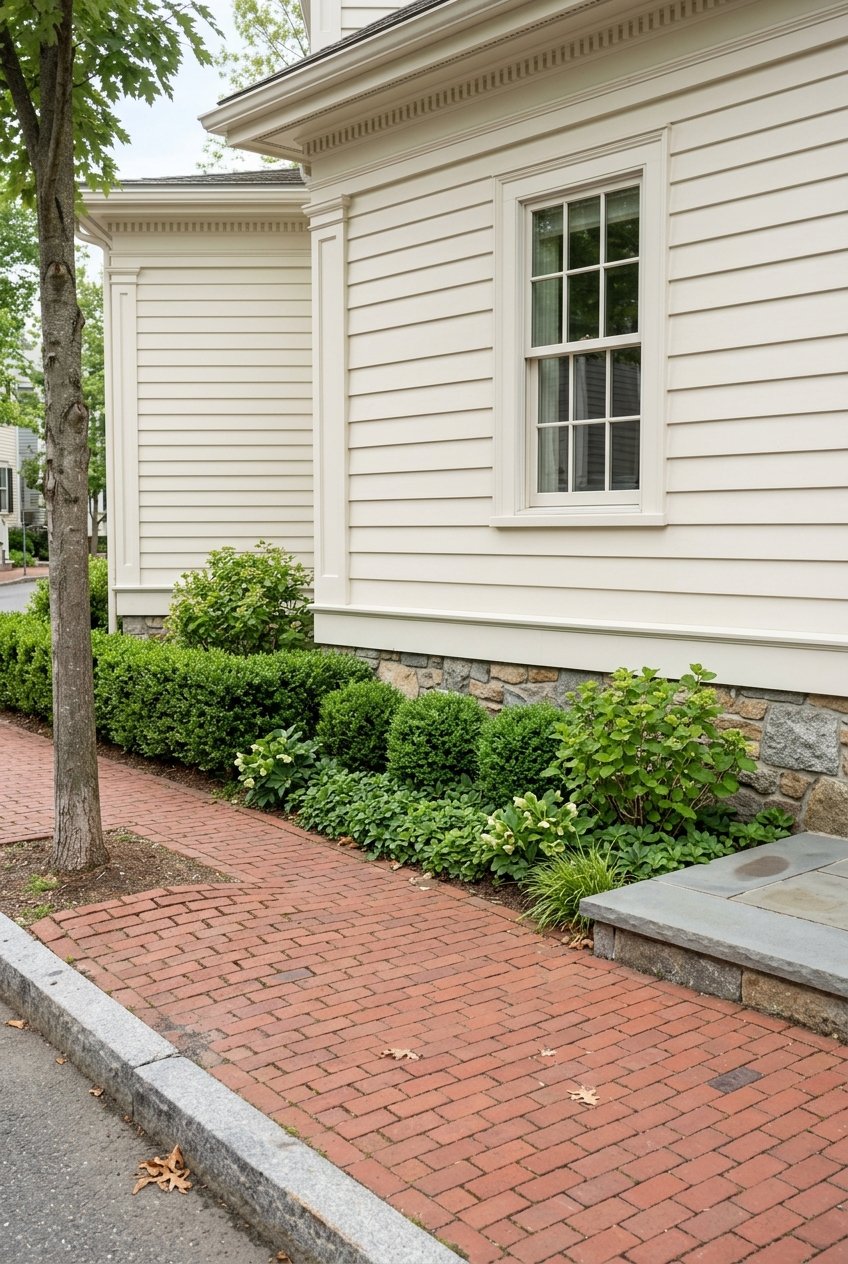
The Western Section is often the first place people picture when they think of classic historic Princeton. It is generally described as being bounded by Bayard Lane, Westcott Road, Elm Road, and Stockton Street, with a strong concentration of older architectural styles.
If you are drawn to homes with established character, this pocket tends to stand out. Buyers often associate the Western Section with Colonial, Tudor, Victorian, and Gothic homes, along with larger lots, mature trees, and a more estate-like setting than a typical subdivision.
This part of Princeton is best known for its architectural presence. The area’s historic development helps explain why so many homes here feel substantial and distinctive, with older design details and streets that read as visually layered rather than uniform.
That does not mean every home is the same. But if your search starts with words like historic, classic, prominent architecture, or larger lot, the Western Section is often where those preferences come into focus.
The Western Section also connects well to some of Princeton’s best-known open spaces and transportation options. Princeton Battlefield State Park offers open fields, trails, the Clarke House, and the Mercer Oak setting, while the adjacent D&R Canal State Park adds a long, flat continuous path.
For getting around, residents can also tap into Princeton’s free Loop bus, Princeton Station, and the Dinky connection. If you value a mix of historic surroundings and practical in-town or regional mobility, that combination is part of the appeal.
Riverside is generally understood as Princeton’s southeastern, lake-adjacent pocket below Nassau Street and near Lake Carnegie. In local planning language, the Eastern Side has been identified as Riverside/Jugtown, which gives this area a broader historical and geographic context.
One of the most useful ways to think about Riverside is as a mixed pocket rather than a single housing type. It combines historic texture, waterfront influence, and later residential infill in a way that can feel quite varied from block to block.
Riverside includes more than one architectural story. The broader area may include modest older buildings tied to the historic Jugtown or Queenstown area, lake-edge homes, and later mid-century residential fabric.
That range matters if you are comparing listings. In practical terms, Riverside can include homes that span from split-level layouts to larger lake-adjacent properties, with a housing mix that feels more variable than the Western Section.
Water and open space help shape everyday life here. The D&R Canal State Park towpath runs through the broader Princeton corridor, and Princeton Battlefield State Park remains a major open-space anchor nearby.
East-side road access is another part of the picture. Princeton-Kingston Road and Riverside Drive serve as key connectors, while the free Loop bus and Princeton Station continue to support town-wide mobility.
Littlebrook is widely understood as one of Princeton’s postwar residential pockets. The neighborhood was built in 1957 to help accommodate post-World-War-II expansion in northeastern Princeton, which gives it a different feel from Princeton’s older historic core.
If you want a neighborhood that reads more suburban and later-developed, Littlebrook often fits that description. It is less about grand historic identity and more about a comfortable residential setting with a practical housing mix.
Littlebrook tends to be more mid-century and more varied in style than the Western Section. Examples connected to the area include Mid-Century Modern homes, and sales activity has shown a mix of ranch, split-level, Cape Cod, and colonial houses on streets such as Littlebrook Road North, Littlebrook Road, Laurel Road, and Snowden Lane.
For many buyers, that variety is a plus. It can mean a wider range of scales, layouts, and update potential, rather than one dominant architectural look.
Littlebrook leans on neighborhood-oriented amenities and east-side walking and biking patterns. Barbara Smoyer Memorial Park on Snowden Lane includes a community garden plot and picnic area, and local mobility reporting notes that the Franklin-Snowden corridor is heavily used by Littlebrook-area residents.
The Loop and Princeton Station still connect the neighborhood to the rest of town. Even so, Littlebrook often feels more locally focused and residential than areas closer to downtown.
If you are trying to narrow your search, it helps to use a simple framework. These three pockets differ most in architecture, setting, and day-to-day feel.
| Micro-neighborhood | Best known for | General housing pattern | Everyday feel |
|---|---|---|---|
| Western Section | Historic architecture and estate-like setting | Older homes, larger lots, mature trees | Classic Princeton with trail and transit access |
| Riverside | Lake-adjacent setting and mixed history | Mixed-era homes with varied types | Water, open space, and east-side access |
| Littlebrook | Postwar residential character | Mid-century and varied suburban-style homes | Neighborhood-oriented and more locally residential |
This kind of side-by-side view can keep you grounded when listings seem hard to compare. A Tudor on a larger lot, a mixed-era home near Lake Carnegie, and a ranch in Littlebrook may all be in Princeton, but they offer very different living experiences.
Once a neighborhood catches your attention, it helps to move from broad impressions to property-level details. Princeton’s GIS tools are one of the best first stops because they let you verify zoning, historic district location, parks, trails, and nearby infrastructure.
You can also compare how a location may function in daily life. Transit resources and town mobility information can help you get a feel for whether an area may be more walkable, bike-friendly, transit-connected, or more car-dependent for your routine.
If you are relocating or preparing to sell, micro-neighborhood context matters in a very practical way. Buyers often respond not just to the house itself, but to how clearly the location story is presented, whether that means historic architecture in the Western Section, a layered lake-adjacent setting in Riverside, or postwar flexibility in Littlebrook.
For buyers, understanding Princeton’s smaller pockets can save time and reduce second-guessing. It helps you focus on the kind of setting, housing stock, and daily rhythm that actually fits your priorities.
For sellers, this same nuance can shape how your home is positioned. A thoughtful pricing and marketing strategy should reflect what makes your micro-neighborhood distinct, because the value story of a historic Western Section home is not the same as the story of a mid-century Littlebrook property.
That is where local guidance makes a real difference. If you want help comparing Princeton neighborhoods, planning a move, or preparing your home for sale with a strategy tailored to its location and strengths, Janet Stefandl can help you move forward with clarity.
Stay up to date on the latest real estate trends.
Janet Stefandl's professionalism, calm demeanor, and unwavering support have earned her glowing testimonials and repeat business. With Janet, you’re choosing a dedicated advocate who is committed to making your real estate vision a reality.

100 OVERLOOK CTR FL 2 PRINCETON NJ 08540